FOUNDATION

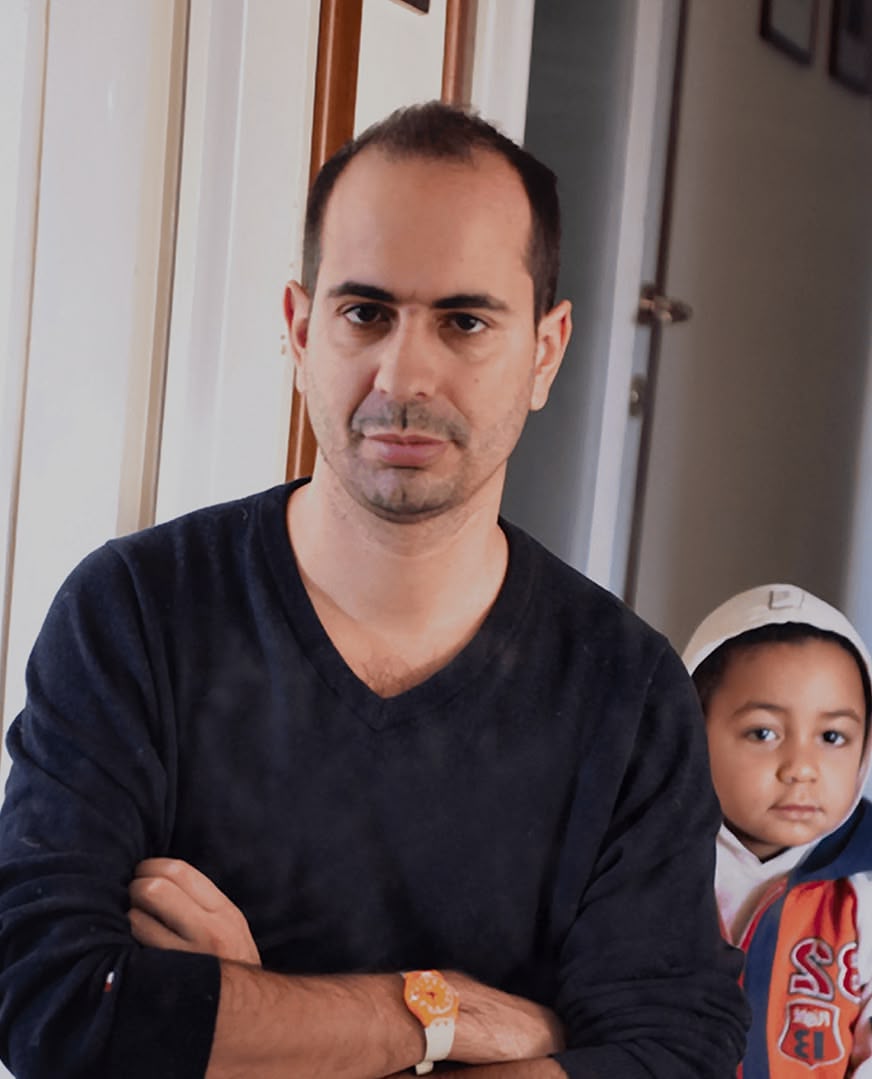
Daniele had a solid education in cultural assets, having completed a graduate course in Parma University and a master's degree at the Università Cattolica in Milan. His interest in photography developed later, with an exponential progression after he had finished his academic studies. His career as a photographer lasted just over eight years.
He started at the age of 31 and ended up retiring at 38 due to deteriorating health.
Daniele developed a strong affinity with African culture. Initially, he was attracted to Cuba and the Caribbean community in London, and later, Congo, Benin, Senegal, South Africa, Botswana and Kenya became his main destinations during his professional prime. When relating to the individuals he was photographing, he was neither assertive nor disrespectful. In fact, he adopted a "non-Western" attitude, entering into strong empathy with his subjects.
According to many of his friends, he thought like an African and was one of "them". He shared spaces and objects, lived in their houses, and avoided the isolation of air- conditioned hotels.
He has attracted the attention of international stars such as Paul Smith, who wrote the introduction to Gentlemen of Bacongo and drew inspiration from the famous image of the "Pink" Sapeur for one of his collections. Then there's Solange Knowles, who developed one of her music videos with the Sapeurs in Cape Town, taking inspiration from Daniele's book.
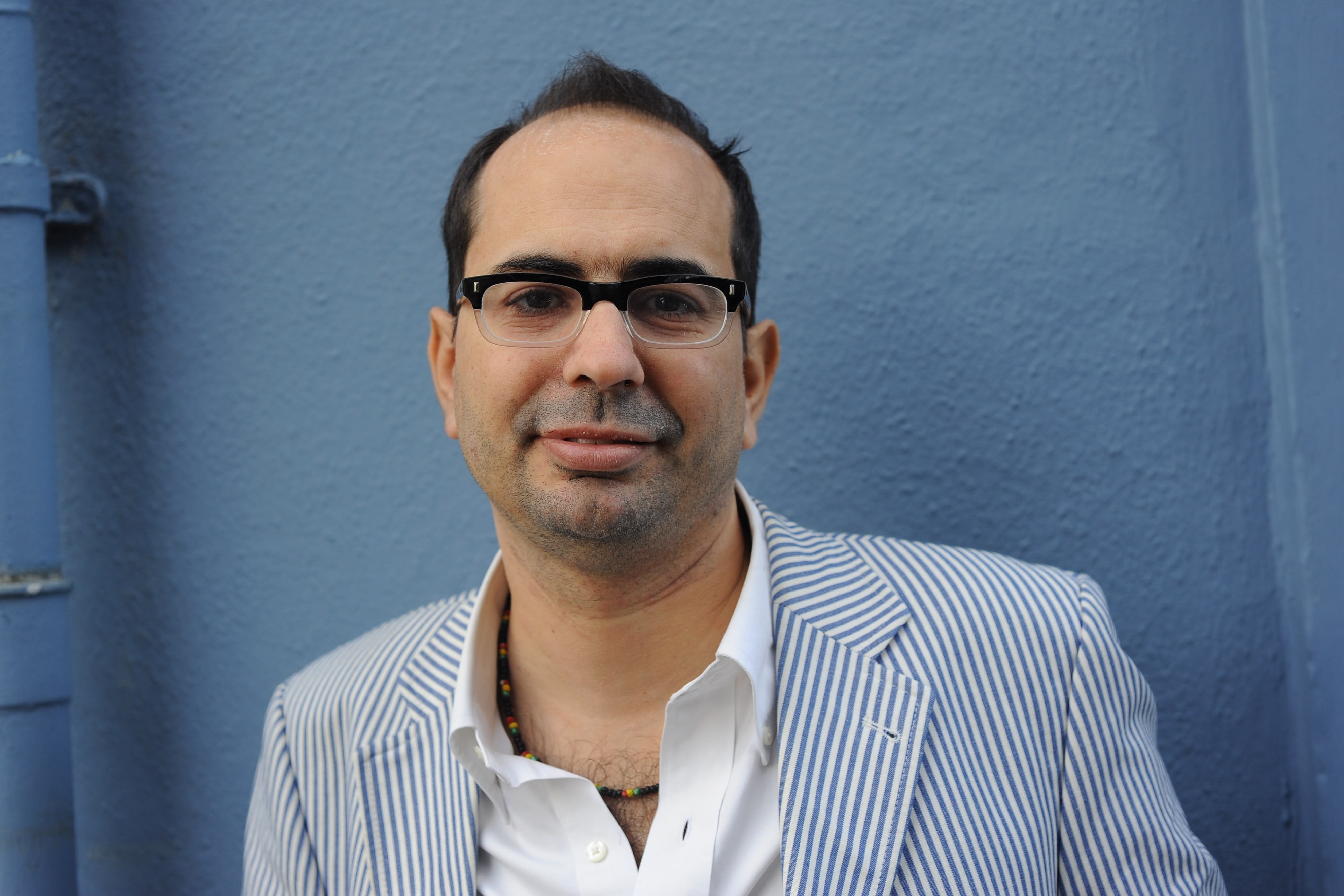
When relating to the individuals he was photographing, he was neither assertive nor disrespectful, building a strong bond of empathy with them.
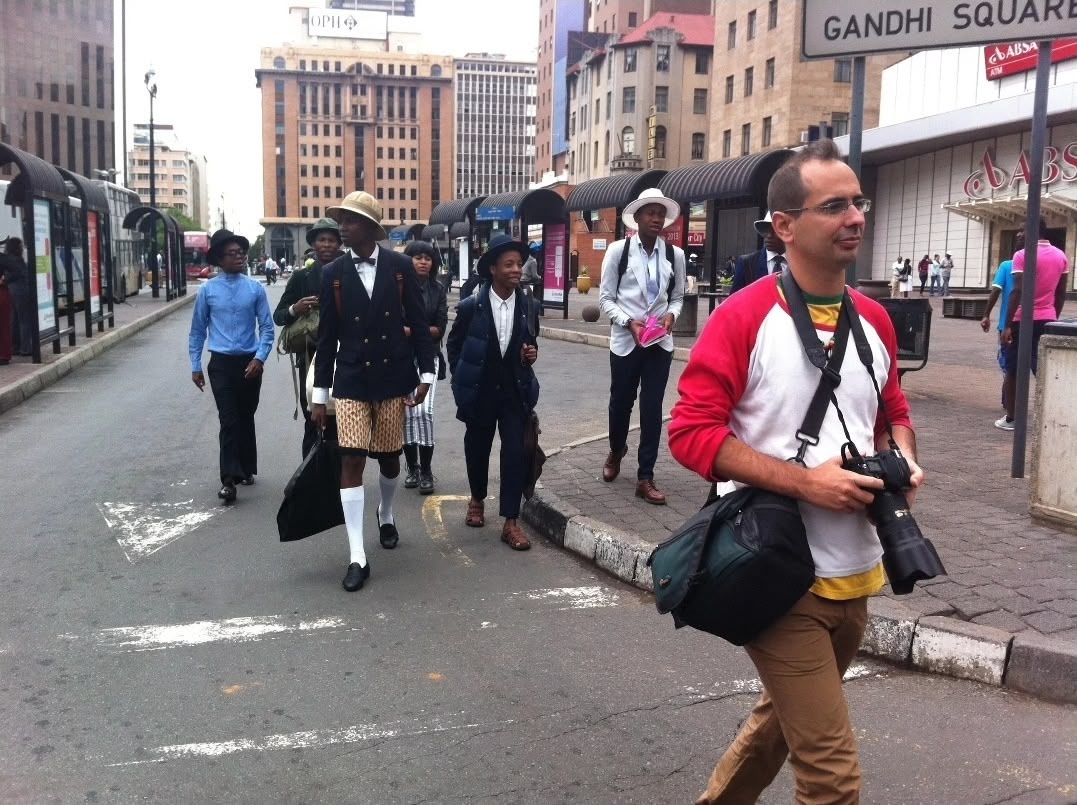
After completing a PhD in Arts Studies at Cattolica University in Milan, Daniele discovered his passion for photography on his first trip to Cuba in 2004. After that trip, he enrolled at Westminster University's Photography Faculty for two years.
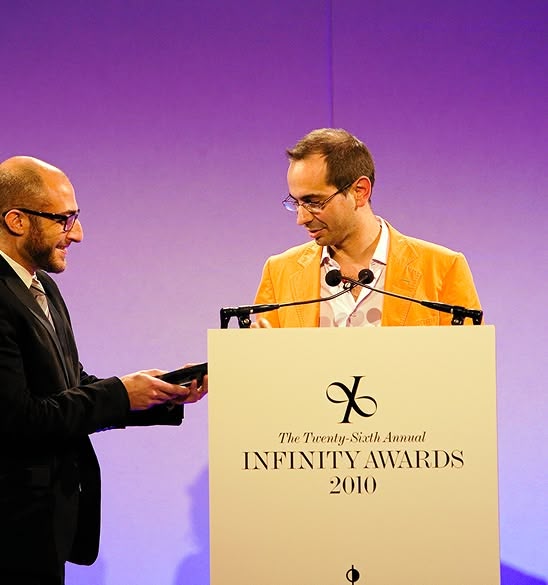
He had his first collective and solo exhibitions in London and Milan. In 2007, he won the Canon Young Photographer Award for his series on Congolese dandies, Sapeurs of Brazzaville. In 2009, he published Gentlemen of Bacongo (TrolleyBooks Edition, London), with the great support of Gigi Giannuzzi and Hannah Watson. The designer Paul Smith, who wrote the preface, found inspiration for his Spring-Summer 2010 collection. In 2010 Daniele was the recipient of the ICP INFINITY AWARD in the fashion category. In the same year he travelled to Bolivia in the Andean village of Kami for an Italian energy company assignment and in La Paz for a project of women wrestlers (Cholitas Luchadores), winning the World Press Photo in Arts & Entertainment category in 2011.
Between 2011 and 2013 Tamagni explored other streetstyle trends and aesthetic of transformationin different contexts (South Africa, Senegal, Cuba, Burma, Botswana). In the meantime, he alternated his research work with commercial and editorial assignments.
In 2012, he took pictures of Solange Knowles for her video "Losing You". In the following years, he shot the cover of Rolling Stone SA featuring the singer Nakhane Touré and Tinie Tempah; the project “Passage to Rajasthan" for the ONE SIGHT Luxottica Foundation in 2012; and the book for Ecopneus in 2013.
In 2014, he began his battle with leukaemia.
The best images of his projects were edited in the book "Global Style Battles", curated by him during the first period of leukemia, published by Abrams in New York, Editions la Decouverte in Paris and later by Seigensha in Kyoto.
Today, his images are published in over 25 books worldwide. Exhibitions featuring his work have been held every year since 2006 in private galleries andmuseums in Europe and the US (such as LACMA in Los Angeles, MoMA in New York, Vitra in Germany, MOCP in Chicago, the Royal Pavilion in Brighton, MART in Rovereto, Italy, the Museu de Citade in Lisbon, the Carrousel du Louvre in Paris, the Lentos Kunstmuseum in Austria, thePrins Claus in Amsterdam, etc.).
.JPG)
Then there's Tinie Tempah, who was fascinated by his style, and Stella Jean, who took inspiration from the Cholitas for her 2017 collection;
Daniele collaborated with Stella Jean despite his deteriorating health. Despite this, and his numerous editorial successes and prizes, editorial assignments were rarely offered to him. Most of his work came from his determination and ability to create travel opportunities.
He received only a few important commissions (Terna in Bolivia, Luxottica in India, Ecopneus in Italy, and FA254 in Kenya). Like many young photographers, he faced constant economic challenges, despite the prizes he received and the substantial sales of the various editions of Gentlemen of Bacongo (over 18,000 copies in total, including the Trolley Books and Japanese Seigensha editions).
.JPG)
Daniele was attracted to fashion from the start, but in a way that the brands and fashion scene of the time were not ready for. He wanted to understand and photograph style, that moment when taste goes from being radically personal to being a gesture and, if you like, a message intended for others. For this reason, his research came first and foremost from people. Daniele wanted to get to know his subjects, to weave friendships, to find out why they dressed in a certain way, what they wanted to say and to whom. Then he decided whether to photograph them or not, but always for reasons that had little to do with glamour and a lot to do with their dreams, their ideas, their aspirations. So, with their names, which Daniele deliberately listed, he broke a good part of the unwritten rules that fashion photography obeys. It is no coincidence that he was particularly attracted to countercultures: the possibility of assuming an identity different from that imposed by convention, the right to express one';s diversity through style, belonging to a community, were all things that Daniele was looking for outside his work. Somehow, through photography, he found them. Telling these stories was not a trivial problem, nor was Daniele's solution: to entrust them to a gaze inspired in equal measure by photojournalism, street photography and fashion photography. It was by no means certain that the gamble would pay off, but it did. Still, more important than the result is the journey, considering that Daniele's images have won a World Press Photo Award, inspired fashion designers such as Paul Smith and Stella Jean, convinced the demanding jury of the ICP Infinity Award and seduced artists such as Solange Knowles. The list could go on, maintaining its heterogeneity. And if mainstream magazines were unwilling to accept his gaze, Daniele managed to create his own space, capturing the attention of a global audience without their mediation, once again helping to pave the way. The fashion he was interested in was a form of resistance, a defence and assertion of identity, a radical beauty in uniqueness. You can see it in the Afrometal portraits, his subjects wrapped in leather from head to toe; in the style battles in Joburg, between flamboyant patterns and joyful dancing; in the shots full of dreams and hopes at Dakar Fashion Week; and in the traditional clothes of the Bolivian Flying Cholitas.
Daniele Tamagni was a dedicated image maker and storyteller. Over the years I knew him, he generously shared his work and research on the divine fashion sense of the Congolese sapeurs. I had the pleasure of witnessing these spectacular images at three of the Black Portraitures conferences co-organized with my colleagues in Paris, Florence and Johannesburg. Tamagni was extremely sensitive to the reality of documenting African subjects within the broader context of visual culture. I admire the softness of his approach, through which he intended the camera to be subservient to the opulent elegance of his subjects. His emphasis on beauty, fashion, history and storytelling imbued a dignity on a part of the world that is too often maligned by images. Tamagni reminded us that personal style is a site of empowerment. His photography makes apparent the individual qualities that bring garments to life, and in so doing his images become a mode to access the complexity and depth of his subjects. …..Each one of his photobooks and projects relies heavily on an analysis of the subject within the frame. He places a keen emphasis on the wearer, the texture of fabric, elements of design, colour, bodily posture and subtle impressions…... He took a big idea, like that of visibility, sought out the places where most people would not look, and revealed that the politics of visibility are at work every day in the action of what we choose to wear. Tamagni leaned into the agency that is inherent in how we choose to show up in the world. As such, Tamagni's photographs are a site of resistance, not only depicting style as a declaration of personal liberation, but also and most importantly a political one focused on freedom.